
Against Expectations
Hopelessness can be a virtue

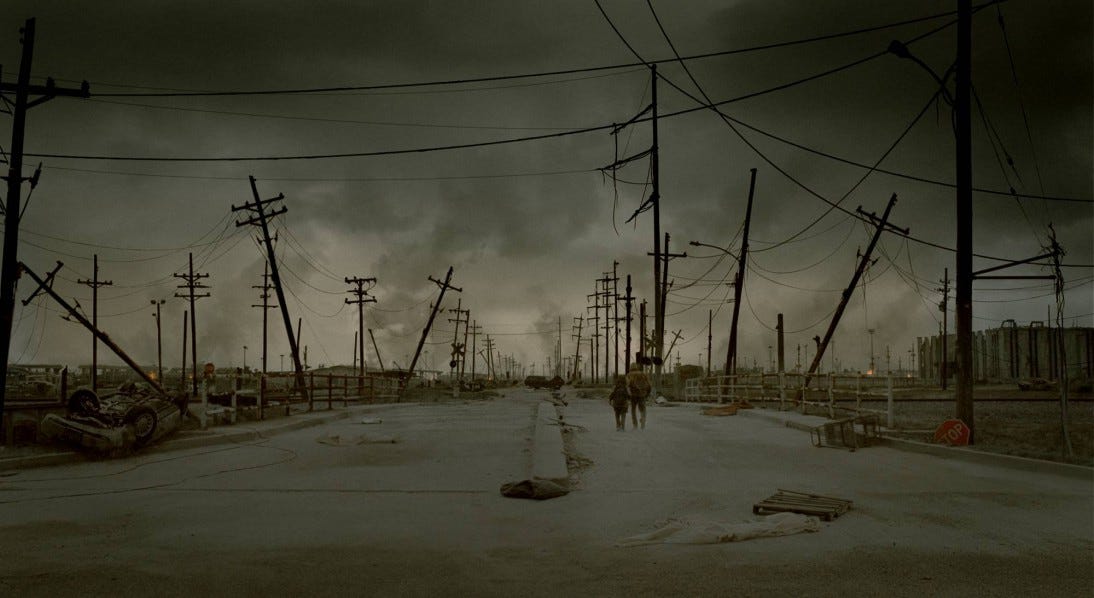
They say that despair is the greatest sin. If this is true then what a sinful time we must live in. It seems to me that there are few people my own age who are content with their lives, who feel that it how things have turned out has met with the hopes they had in entering their adult years. Those whose financial, familial or political ambitions have been thwarted are commonplace, and in some ways I count myself among them. Many of the hopes I had for my own life have failed to materialise. Some of the reasons for that are my own failures, but many are due to the environment I and many others have found ourselves in. Such brute facts of life have led me to a state of hopelessness at times, but after many challenges I have found that “despair” does not have to be the curse it is often believed to be. While they say that it is the greatest sin, I say that despair can, in fact, be liberating.
It is not hyperbolic to say that live in an age of disappointment. Everything that was promised to our generation and those that came after us has failed to materialise. We live in poorer societies than the ones we grew up in. Our so-called “life milestones” have not been achieved by many. For most of us our careers aren’t what they were supposed to be. Deaths of despair are rising year-on-year. And when you read the commentary on these phenomena that proliferates online and in the news media, you see a pattern of unrelenting bleakness. It seems people have little hope for the future.
But the question we must ask is, must this necessarily be a bad thing? And if we are not to achieve what we once thought we might, what solace might we be offered? In our atheistic societies, many of the traditional consolations are unavailable to us. The Christian command to “be in the world, not of it” does nothing to assuage the anxieties of those who do not believe that there are other worlds than this. Where can we look, if not here?
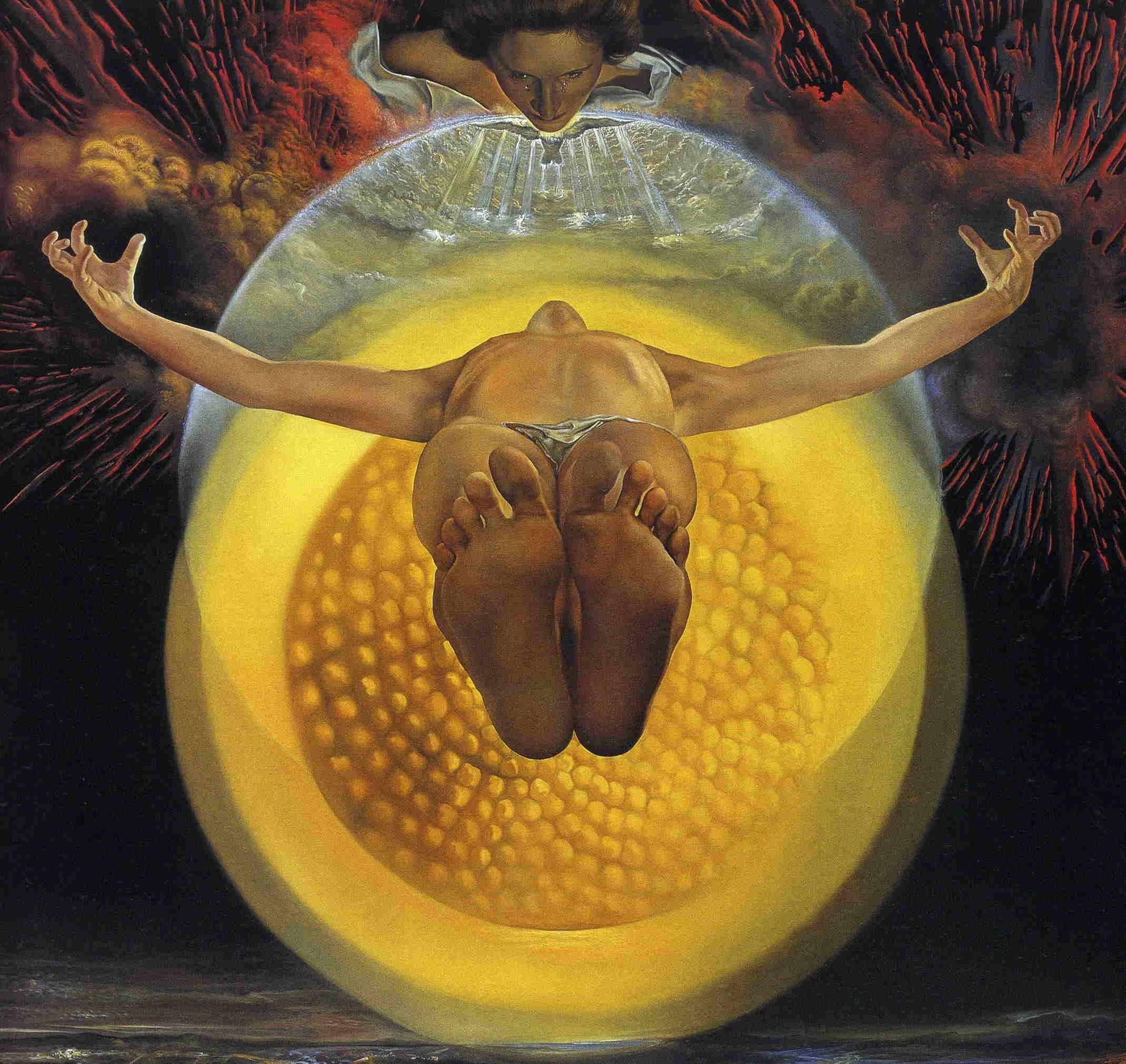
It has been noted for some time that, in light of our drift from our Christian heritage, a public interest in other strains of though has come in to fill the gap, some more foreign to our own traditions than others. Stoicism, which has seen an explosion in public interest, extols the virtues of accepting what we cannot change. While some consider this a “philosophy of defeat”, the truth is that a remarkable number of the things that have bearing on our lives are out of our control.
For those with more “vitalist” leanings this seems like a form of weakness, living as we do in a world built upon liberal priors that exalt human action and the ability of people to “pull themselves up by their bootstraps”. Such people tend to be obsessed with displays of success, but not only are they outliers, they also limit the purview of the philosophy only to the winners. Is the failure any less “vital” because he does not succeed, despite his efforts? Perhaps the most vital man of all is the one who is able to continue despite the knowledge that he may have little success, if any at all. For many of us whether we are a “success” or a “loser” is mostly out of our hands. The stoics understood this. Each of us lives with our impossibility just as much as our possibility, and the breadth of our impossibility is far greater.
But still, it must be imagined that most people continue against difficult odds because they hope that, someday, their work will be rewarded. And so what does one do when such hope evaporates, as it seems to have done for so many? Are we doomed to listlessness and inaction in such a case? Perhaps Eastern philosophy can be instructive here. In the Buddhist tradition, we encounter the concept of dukkha, which is often translated as “suffering” (particularly within the maxim “life is suffering”) but is more correctly understood as meaning “unsatisfactoriness”. For the Buddhist, life being unsatisfactory is actually an existential given, a pre-condition of life itself. If we can radically accept such a notion then we are largely freed from the unease we feel regarding our life’s disappointments. We can allow ourselves to no longer imagine or expect a life that is better than the one we have now. While this may sound depressing, it can be immensely freeing.
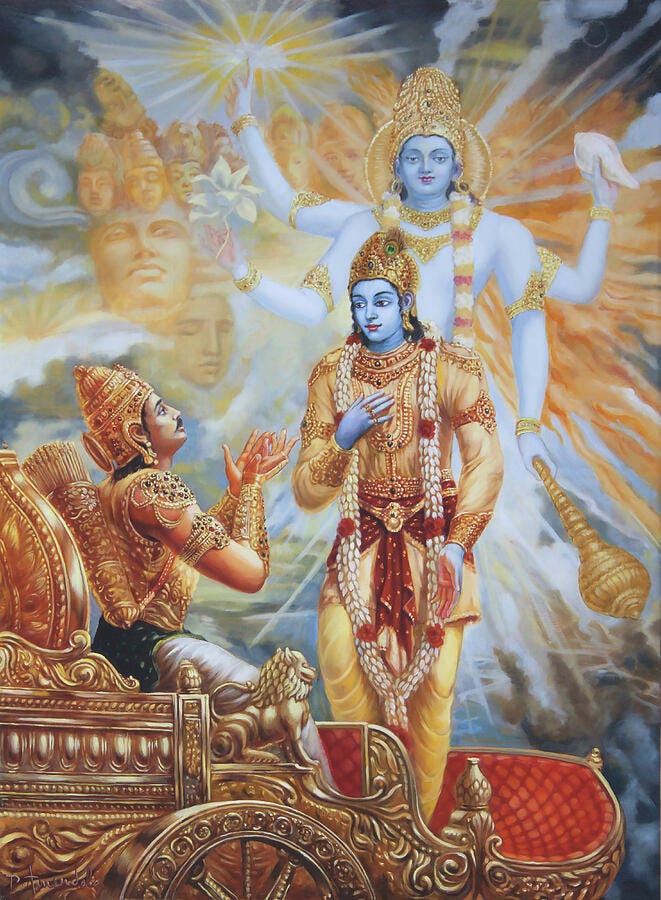
But doing this requires us to walk a delicate line. Such acceptance of dissatisfaction can tip us over into learned helplessness. Here, another Eastern tradition offers us an answer, that being Hinduism. In the Bhagavad Gita, Arjuna is counselled by Krishna to renounce the fruits of his actions. In other words, he is advised to do that which he is duty-bound by existence itself to do, and to expect nothing in return. As such, to act rightly can be seen as its own reward. Such thinking is highly alien to us. We in the West are continually plotting and analysing our actions, attempting to eke out the highest reward for the most effort. This often goes awry, and we become even more analytical, and perhaps even paralysed, by our need to “get it right this time”. I have become mired in this kind of thinking many times, and I often fall afoul of it still. The answer in all cases is simply to do the thing because it is right to do so.
If we can commit ourselves to do work without the need to chase any outcome as a result, we can see that this may give us a stable foundation in life. We may, in the words of Miyamoto Musashi, “seek nothing outside ourselves” as all that is required is within. With this realisation, I am drawn back Westwards to the work of Julius Evola, and particularly his final book Ride The Tiger, a thesis on how to survive the modern world. For Evola, the only route to satisfaction in the modern world is to rise above one’s own material conditions. The modern world, he notes, offers us little in the way of structure and meaning, the institutions that were intended to allow man to realise himself within the world having long been degraded or destroyed. It is in this psychic wasteland that we must become all that we can be, despite the lack of encouragement we may receive. In so doing we must learn not only to expect little or nothing of the world, but to actively expect that it will resist us at every turn. The modern world is a hostile entity, which does not wish for our prosperity, but only our dissolution.
It is within such a hopeless frame that we can begin to free ourselves from expectations, being as they are the root of much (if not all) suffering. I have been meditating on this frequently. Whenever I find myself daydreaming of a “better future”, I now seek to remind myself that that is all it is and ever shall be - a dream. As a younger man I had many such dreams, particularly for my career, although not limited to that. Very little of it has come to pass. Perhaps, in the full light of day, I would be considered a starkly unimpressive individual, a “waste of potential” or something to that effect. Be that as it may, I no longer hope for anything different. The world is as it is, and we are but a small part of it. Bending the future to our will is not within our power alone. What will be will be, and to wish for nothing other than what will be is to escape the cycle of suffering that often leaves us so discouraged when it arrives.
Dreams In The Void is currently free to all readers. In the future, I plan to include more in-depth articles and other bonuses for paid subscribers. If this would interest you, please consider subscribing and pledging your support (you will not be charged anything, this simply helps me to gauge demand):
If you found my work valuable and would like to support me directly, any tips are very gratefully received:
I also occasionally include affiliate links to books in my articles. For more information about these please check out the Dreams In The Void about page.
Who and what define success and comfort and to what degree etc.? I'm not sure I'd agree with your supposition(s). It's thoughtful.